
Pool Heaters & Heat Pumps: Choosing the Right Pool Heater
A swimming pool is a great addition to any Florida home, but even in sunny St. Augustine, water temperatures aren't always perfect. A pool heater or heat pump can help extend your swimming season, make cooler days more comfortable, and give you greater control over your pool's temperature.
There are several types of pool heating systems available, including gas pool heaters, electric heat pumps, solar pool heaters, and combination heating and cooling systems. The right choice depends on your pool size, how often you swim, how quickly you want to heat the water, your budget, and how you plan to use your pool.
Here's what you should know before choosing a pool heating system.
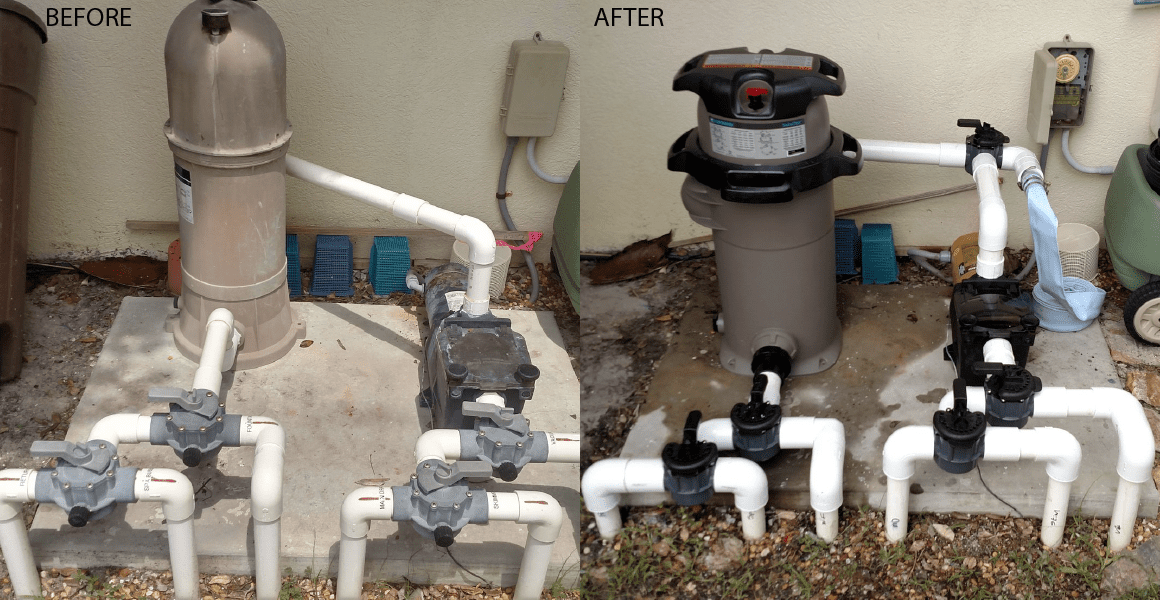
Why Use a Pool Heater?
Even in Florida, pool temperatures can fluctuate throughout the year.
Cooler winter temperatures, chilly evenings, and changing weather can make your pool less comfortable than you'd like. A pool heater gives you greater control over the water temperature and can help you enjoy your pool more consistently throughout the year.
A pool heating system can be especially useful if you:
- Want to extend your swimming season
- Prefer warmer water
- Use your pool year-round
- Have a spa or attached hot tub
- Want more consistent water temperatures
- Have children or family members who prefer warmer water
- Want to get more use out of your pool investment
The best system depends on how you use your pool and what you expect from your heating equipment.
Pool Heat Pumps
A pool heat pump is a popular option for homeowners looking for an energy-efficient way to heat their pool.
Instead of generating heat directly, a heat pump works by capturing heat from the surrounding air and transferring it into the pool water.
Because heat pumps move existing heat rather than generating it in the same way a gas heater does, they can be an efficient option for maintaining a comfortable pool temperature.
Benefits of Pool Heat Pumps
- Energy-efficient operation
- Lower operating costs compared with some traditional heating methods
- Good for maintaining a consistent temperature
- Ideal for homeowners who swim regularly
- Available in a variety of sizes
One thing to keep in mind is that heat pumps depend on the surrounding air temperature. They may take longer to heat a pool, particularly during colder weather.
Gas Pool Heaters
Natural gas pool heaters are another popular option, particularly for homeowners who want to heat their pool quickly.
Gas heaters generate heat and transfer it to the pool water, allowing them to raise the water temperature relatively quickly.
Modern gas pool heaters have also become more efficient than older systems. Many newer models feature electronic ignition, improved combustion technology, and lower emissions.
Benefits of Gas Pool Heaters
- Fast heating
- Effective during cooler weather
- Can provide strong heating performance
- Good for pools used occasionally
- Available in different sizes to accommodate various pool systems
Gas heaters can be a good choice for homeowners who want to heat their pool quickly rather than maintaining a consistent temperature all the time.
Solar Pool Heaters
Solar pool heating systems use energy from the sun to help warm your pool water.
Solar heating can be an environmentally friendly option and can help reduce the amount of electricity or gas required to heat your pool.
Solar pool heating systems can use multiple solar collectors to increase the amount of heat available to the pool.
Benefits of Solar Pool Heating
- Uses renewable energy
- Low operating costs
- Can help extend the swimming season
- Environmentally friendly
- Can work well in sunny climates like Florida
Solar heating performance depends heavily on available sunlight, weather conditions, system size, and the amount of solar collector space available.
Pool Chillers: Keeping Your Pool Cool in Summer
Heating isn't the only way to control your pool's temperature.
During the hottest parts of the Florida summer, pool water can sometimes become warmer than you'd prefer. A pool chiller can help lower the water temperature and make swimming more comfortable.
Some systems combine heating and cooling capabilities, allowing you to maintain a more comfortable pool temperature throughout the year.
This can be particularly useful for Florida homeowners who want year-round pool temperature control instead of simply heating their pool during cooler months.
Heat & Cool Systems for Year-Round Comfort
If you want the ability to both heat and cool your pool, a combination heat and cool pool system may be worth considering.
These systems can help warm the pool during cooler weather and lower the water temperature when summer temperatures become excessive.
Some systems use titanium heat exchangers, making them well suited for applications involving saltwater pools.
A digital controller can also make it easier to monitor and maintain your desired water temperature.
Which Pool Heater Is Right for You?
There isn't one pool heating system that's perfect for every homeowner.
The right choice depends on several factors, including:
- Pool size
- Pool location
- Desired water temperature
- How frequently you swim
- How quickly you want to heat the pool
- Your available energy sources
- Existing pool equipment
- Pool cover usage
- Budget
- Whether you want heating, cooling, or both
For example, a homeowner who swims several times a week may prefer an efficient heat pump for maintaining a consistent temperature.
Someone who only heats the pool occasionally may prefer the faster heating capabilities of a gas heater.
And for homeowners interested in both heating and cooling, a heat-and-cool system may provide the most flexibility.
What About Pool Heaters for Saltwater Pools?
If you have a saltwater pool, it's important to make sure your heating equipment is appropriate for the system.
Some modern pool heating and cooling systems use titanium heat exchangers, which are designed to withstand the demands of saltwater applications.
However, compatibility depends on the specific equipment and pool system.
Before installing or replacing a pool heater, it's a good idea to have your existing equipment evaluated to make sure everything will work together properly.
Pool Heater Service & Diagnostics
A pool heater that isn't heating doesn't always mean the heater needs to be replaced.
Problems with water flow, electrical components, controls, sensors, automation, plumbing, or other connected equipment can affect heating performance.
Common signs that your pool heater or heat pump may need professional attention include:
- Your pool isn't heating
- The heater won't turn on
- The heater keeps shutting off
- The water isn't reaching the desired temperature
- The heat pump isn't performing properly
- The system is making unusual noises
- Your automation system isn't controlling the heater properly
- The heater displays an error code
- Water flow through the system seems inadequate
Professional pool heater diagnostics can help determine what's actually causing the problem before you invest in a replacement.
Pool Heaters in St. Augustine, FL
Florida homeowners can enjoy their pools for much of the year, but having the right heating and cooling system can make your pool even more comfortable.
For homeowners in St. Augustine and St. Johns County, Pool Techniks provides professional pool heater and heat pump diagnostics and service for residential pool systems.
We can help you understand your existing equipment, troubleshoot heating problems, and determine what type of solution may be appropriate for your pool.
Pool Techniks serves homeowners throughout St. Augustine, Nocatee, Ponte Vedra, Palencia, Beachwalk, RiverTown, Shearwater, SilverLeaf, Beacon Lake, St. Johns Golf, World Golf Village, and surrounding St. Johns County communities.
Need Help Choosing or Troubleshooting a Pool Heater?
Not sure whether a pool heat pump, gas heater, solar heater, pool chiller, or heat-and-cool system is right for your pool?
We're happy to help you understand your options.
Call or Text Pool Techniks at (904) 297-2212.
We'll evaluate your pool system and help you understand what makes sense for your pool, your equipment, and the way you use it.
Recent Posts
Still have questions?
Contact us
We would love to hear from you!
Please complete the form below and we will be back in touch as soon as possible!
Contact Us
We will get back to you as soon as possible.
Please try again later.