
Variable Speed Pool Pumps: Are They Worth It?
If you're looking for a more energy-efficient way to operate your swimming pool, a variable speed pool pump may be worth considering. Unlike traditional single-speed pumps that run at one constant speed, variable speed pumps allow you to adjust the motor speed based on what your pool needs. That flexibility can mean lower energy consumption, quieter operation, better filtration, and more control over your pool equipment. But is a variable speed pool pump right for your pool? Let's take a closer look.
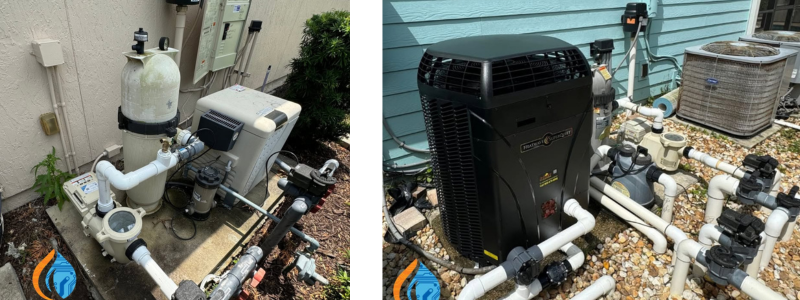
What Is a Variable Speed Pool Pump?
A variable speed pool pump allows the motor to operate at different speeds rather than running at full power every time it is turned on.
Your pool doesn't need the same amount of water flow for every task. Normal filtration may only require a lower flow rate, while heating, cleaning, water features, or other equipment may require more.
A variable speed pump lets you adjust the pump's output to match the job.
This can make your pool's circulation system more efficient while reducing unnecessary energy use.
Variable Speed vs. Single-Speed vs. Dual-Speed Pool Pumps
There are three common types of pool pump motors: single-speed, dual-speed, and variable speed.
Single-Speed Pool Pumps
A single-speed pool pump operates at one speed, typically at full power.
They're generally less expensive upfront, but the pump uses the same amount of energy whether your pool needs a high flow rate or only basic circulation.
Dual-Speed Pool Pumps
Dual-speed pumps provide two operating speeds.
The lower speed can be used for everyday filtration and circulation, while the higher speed can be used when more water flow is needed for tasks such as cleaning, heating, or operating certain pool features.
Variable Speed Pool Pumps
Variable speed pumps provide much greater control over the motor speed.
Instead of simply choosing between high and low, you can operate the pump at different speeds based on your pool's needs.
That flexibility is one of the biggest advantages of a variable speed pool pump.
Why Are Variable Speed Pool Pumps More Energy Efficient?
One of the biggest reasons homeowners choose variable speed pumps is energy efficiency.
Pool pumps don't necessarily need to run at maximum speed all day. Running the pump at a lower speed for longer periods can provide the circulation your pool needs while using less energy.
Variable speed pumps use electronically commutated permanent magnet motors, which are designed to operate efficiently across a range of speeds.
The result can be:
- Lower energy consumption
- Reduced operating costs
- Quieter pump operation
- More precise control
- Improved filtration
- Greater flexibility
The actual savings will depend on your pool, pump size, operating schedule, plumbing, and how the pump is programmed.
Do Variable Speed Pool Pumps Save Money?
They can.
A variable speed pump typically costs more to purchase than a traditional single-speed pump. However, the lower operating speed and greater control can reduce electricity consumption over time.
For homeowners who run their pool pump for many hours each day, those energy savings can make the higher initial investment worthwhile.
It's important to look at the total cost of ownership, not just the purchase price.
A less expensive pump isn't necessarily the least expensive option to operate over several years.
How Long Should a Variable Speed Pool Pump Run?
There's no single schedule that works for every pool.
The ideal operating schedule depends on factors such as:
- Pool size
- Pump size
- Plumbing configuration
- Pool usage
- Filtration system
- Water features
- Pool heater or heat pump
- Salt system
- Automation system
- Required turnover rate
One of the advantages of a variable speed pump is that you can program different speeds for different periods of the day.
For example, your pump may run at a lower speed for routine circulation and increase its speed when additional flow is needed.
A pool professional can help determine an appropriate operating schedule for your specific system.
Are Variable Speed Pool Pumps Quieter?
Generally, yes.
Because variable speed pumps can operate at lower RPMs, they are often noticeably quieter than traditional single-speed pumps running at full speed.
That's particularly valuable for pools located close to patios, outdoor living areas, bedrooms, or neighboring homes.
A quieter pump can make your entire pool area more enjoyable.
Can a Variable Speed Pump Work With Pool Automation?
Yes. Many modern variable speed pumps are designed to integrate with compatible pool automation systems.
This can allow homeowners to control pump speeds and schedules along with other pool equipment such as:
- Pool heaters
- Heat pumps
- Salt systems
- Pool lights
- Water features
- Valves
- Filtration equipment
Proper compatibility and configuration are important, so it's a good idea to have your equipment evaluated before replacing or upgrading your pump.
Is a Variable Speed Pool Pump Right for Your Pool?
A variable speed pump can be an excellent choice, but it isn't automatically the best solution for every pool.
The right pump depends on your existing equipment, plumbing, pool size, desired flow rate, and how you use your pool.
If your current pump is working properly, replacing it simply because variable speed pumps are more efficient may not always make financial sense immediately.
On the other hand, if your pump is aging, you're facing an expensive repair, or you're looking for ways to reduce your pool's energy consumption, upgrading to a variable speed pump may be worth considering.
Signs You May Need Pool Pump Service or Replacement
If you're experiencing any of these problems, your pool pump may need professional attention:
- The pump won't start
- The pump is making unusual noises
- The pump is leaking
- Water flow is weak
- The pump keeps shutting off
- The pump is overheating
- Your pool isn't circulating properly
- Your energy costs seem unusually high
- The pump is difficult to program
- Your equipment isn't communicating with your automation system
Some problems can be repaired without replacing the entire pump.
That's why proper pool pump diagnostics are important before making a replacement decision.
Variable Speed Pool Pumps in St. Augustine, FL
Florida pools can run for much of the year, which means your pool equipment can get a lot of use.
For homeowners in St. Augustine and St. Johns County, choosing the right pool pump and operating it efficiently can make a meaningful difference in the long-term cost and performance of your pool.
Pool Techniks can help homeowners understand their pool equipment, diagnose pump problems, and determine whether repair, replacement, or an equipment upgrade makes sense.
We serve homeowners throughout St. Augustine, Nocatee, Ponte Vedra, Palencia, Beachwalk, RiverTown, Shearwater, SilverLeaf, Beacon Lake, St. Johns Golf, World Golf Village, and surrounding St. Johns County communities.
Need Help With Your Pool Pump?
If you're not sure whether your pool needs a variable speed pool pump, pump repair, or a completely different solution, we're happy to help you understand your options.
Call or Text Pool Techniks at (904) 297-2212.
We'll take a look at your pool system and give you an honest recommendation based on your equipment and needs.
Recent Posts
Still have questions?
Contact us
We would love to hear from you!
Please complete the form below and we will be back in touch as soon as possible!
Contact Us
We will get back to you as soon as possible.
Please try again later.